Featured Work


Featured Work

Oli Smith | Founder

Danny Stead, who’s been with us since 2017 has risen from designer, to developer to Head of Digital. We sit down with Dan to learn more about his journey and what the future holds in his new role.
Take us back to day one at Smith eight years ago. What made you say yes?
I still remember this. We’d just started working with our largest client at the time, Boss Cabins, and it was my job to help roll out the branding and support on the website design. It felt like a real step up in terms of client and responsibility.
I genuinely enjoyed working at my previous job. It was the perfect introduction to working in a design agency, and I learnt a lot from everyone there. However, after two and a half years, I felt like it was time for a change. Around that time, Oli, who I’d studied with at Batley School of Art, was getting busier and reached out to ask if I fancied another challenge. The timing worked out well for both of us, and I’ve been here ever since.
What’s changed most about you as a designer/developer?
The biggest change has been how I approach problem solving. Whether it’s design or development, I now think in systems, using past projects as a reference rather than starting from scratch every time. Over the years, that knowledge and those systems have compounded, helping me solve problems more efficiently and with better judgement.
What’s a project from the last few years you’re proudest of, and why?
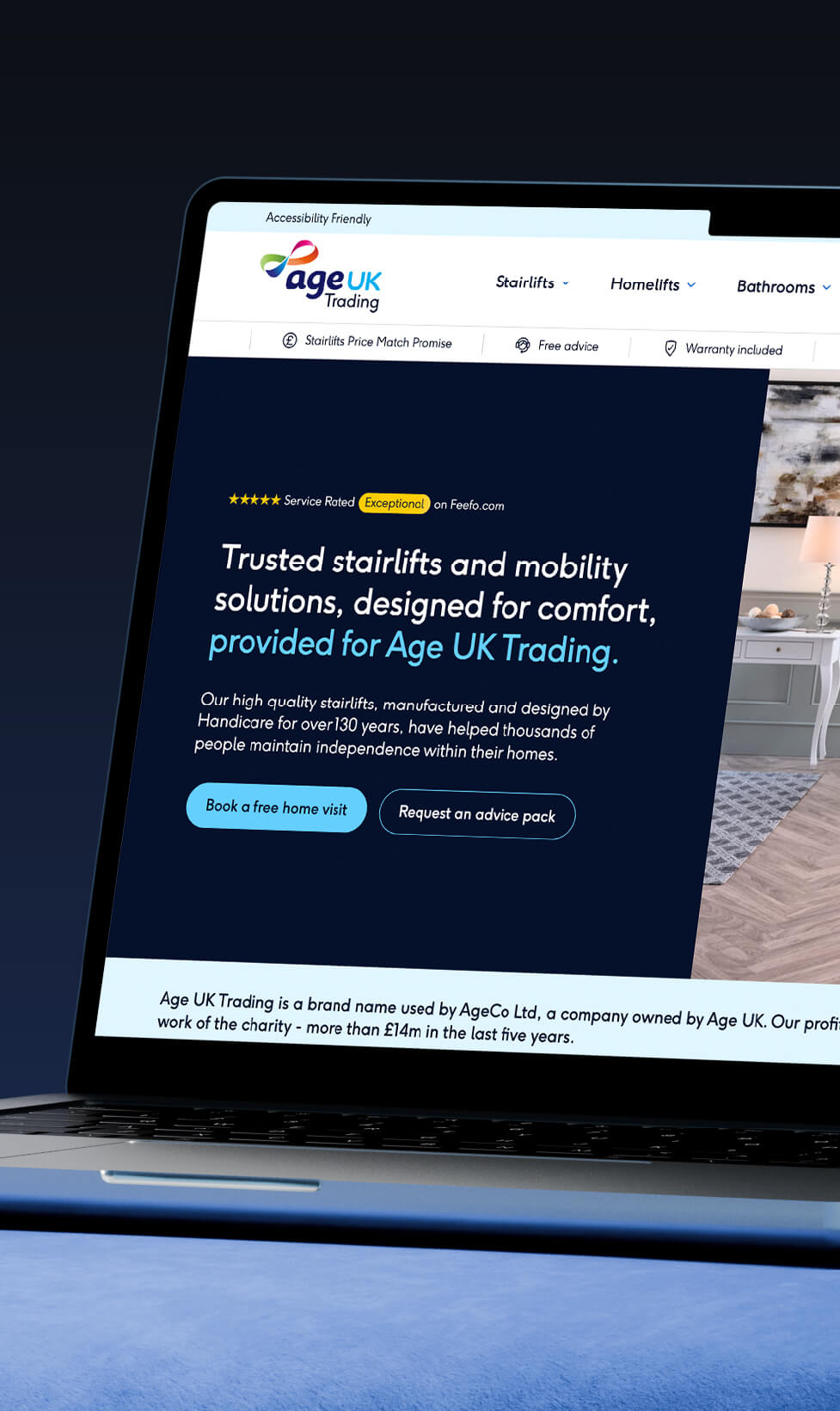
Age UK Trading. It was another significant step up in scale and responsibility, but what I really enjoyed was the team aspect. Smaller projects might only have one or two people involved, but this was a proper team effort, with more people bringing different ideas and expertise to the table. I think that’s what made the outcome so strong, and the client’s feedback reflected that too.
Digital has changed a huge amount in eight years. What’s the biggest shift you’ve had to lead the team through?
AI, without a doubt. There was some initial hesitation, both within the team and across the industry, so I focused on showing people what it could actually do rather than what they feared it might do. When it’s used properly, I believe it can allow a team of ten to achieve what previously would have taken a team of a hundred. It’s easy to focus on the negatives, but I think if we embrace it properly, it can make us more productive than ever.
What does “Head of Digital” actually mean day to day? What will you be doing differently?
Head of Digital means being in charge of all things related to our websites, primarily on the development side. Up to now, my instinct has always been to do things myself, but this role means learning to delegate properly, so I can focus my time on the decisions and work that have the biggest impact on the business. That includes improving our development processes to make them more efficient, streamlining our server setup further, and building proper documentation so knowledge isn’t just sitting in my head.
Where do you think client expectations of digital are heading in the next couple of years?
I think clients are going to expect a lot more speed, largely driven by AI. Where a website project used to take months, clients will increasingly expect faster turnarounds without sacrificing quality. I also think expectations around ongoing support will shift, clients won’t just want a site built and handed over, they’ll want an ongoing partner who keeps improving it as their business changes. The businesses that adapt fastest to this shift, rather than resisting it, are the ones who’ll stay ahead.
What’s one thing Smith does differently on digital that other agencies don’t?
We build everything properly, rather than relying on page builders and templates that a lot of agencies use to churn out sites quickly. We use Roots Sage, so every site is coded properly from the ground up. It means the end result is faster, more secure, and much easier to maintain long-term. We also bring behavioural science into how we design sites. Principles like choice architecture help us guide visitors towards the actions that matter most, while a fast, secure site quietly signals trust before a visitor has even read a word of copy. It’s not something most agencies focus on, but it gives our clients a real competitive edge.